hardwareml / ai
signbridge
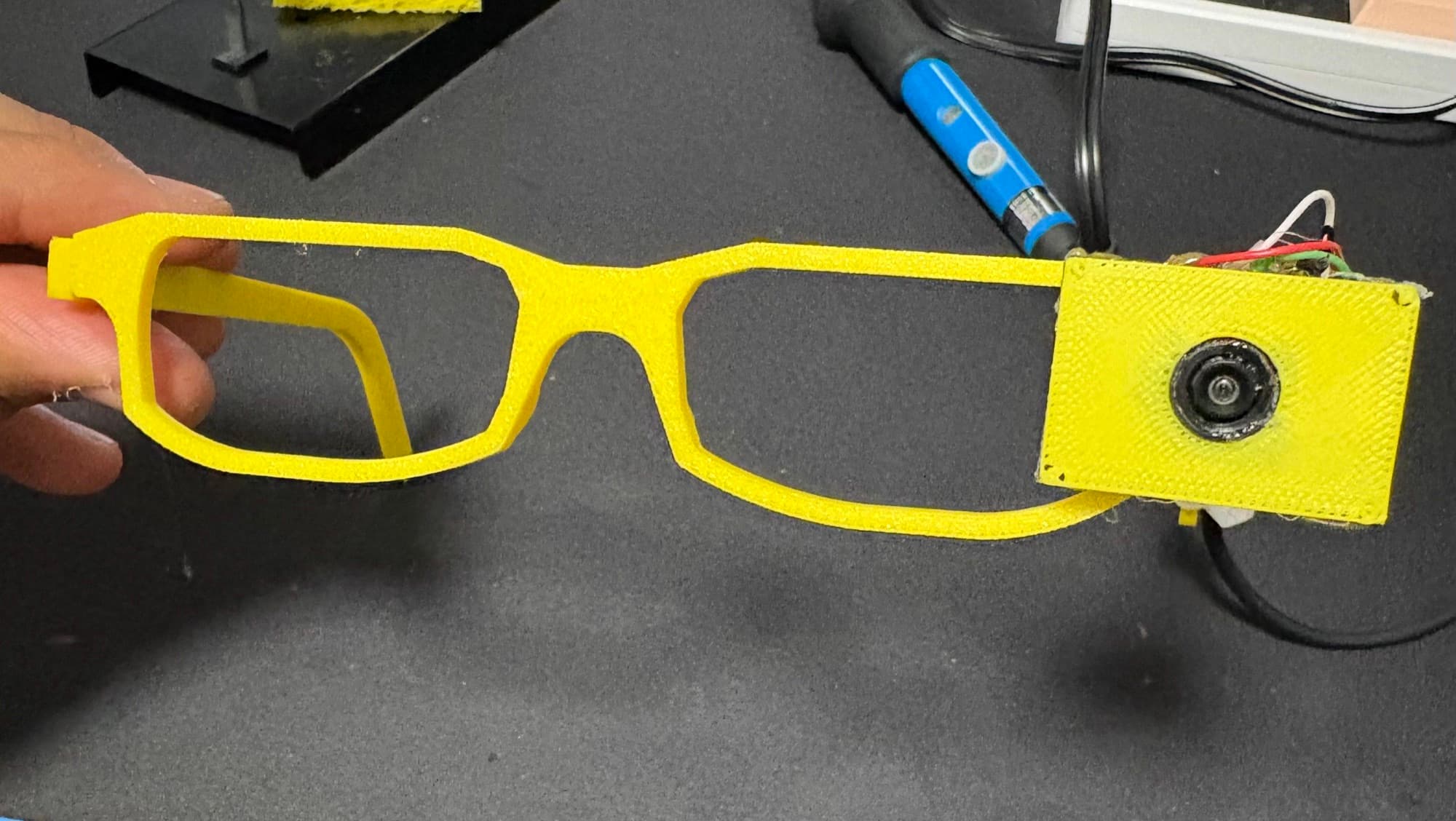
a wearable that translates sign language in real time - built at hacked 2026 at the university of alberta.
the problem
for many deaf and hard-of-hearing people, a doctor's visit can be a source of real anxiety. we were moved by the story of an asl instructor who was refused treatment because no interpreter was available. bringing a third-party interpreter can compromise medical privacy - we wanted something that lets people communicate on their own, privately.
design choices
- a wearable: 3d-printed glasses with a camera on the left arm, so the signer's hands stay free and the camera sees what they see.
- a raspberry pi as the processor - compact enough to wear, and our team was already strong in python.
- mediapipe hands for real-time 3d hand landmarks, feeding a tensorflow model that maps them to asl signs.
- our own dataset. public asl datasets didn't match a wearable camera's angle or the lighting of a clinic, so we recorded data from the device itself.
- a fingerspelling / word toggle. the model struggled to tell letter-by-letter spelling from single-gesture words, and forcing a word onto a letter produced gibberish - so we built logic to switch between the two modes.
challenges
- weight balance - fitting a camera and a raspberry pi onto someone's head took several redesigns of the glasses.
- soldering in tight spaces led to loose connections, and keeping the camera's power supply stable took real time.
what i learned
how to fit a machine-learning pipeline into constrained hardware - and that engineering matters most when it serves someone's independence and dignity.
team
built with harsit baral, akileash saravanan and dip khadka.
gallery
live demo of the glasses translating signs. mediapipe hand landmarks with the model's confidence score.
next project
optibox